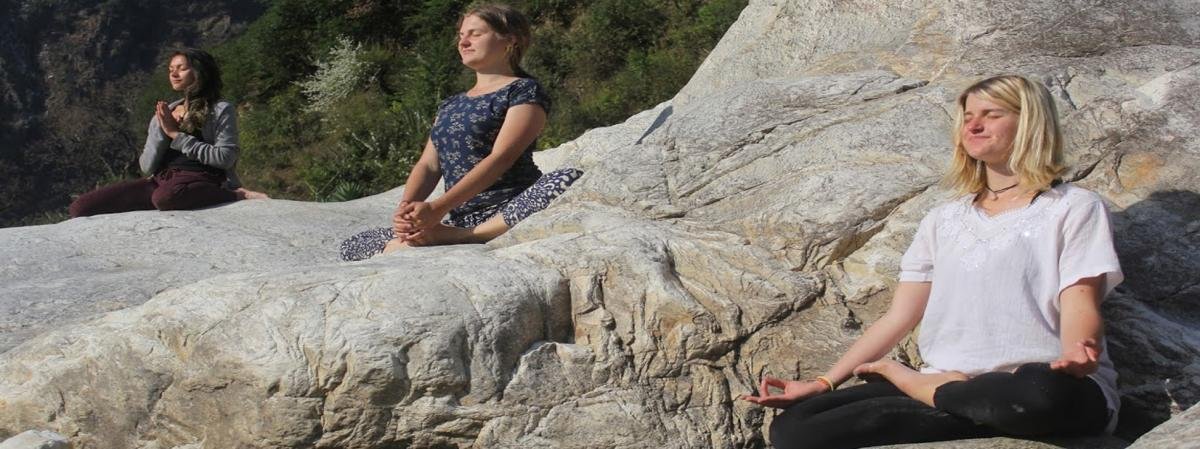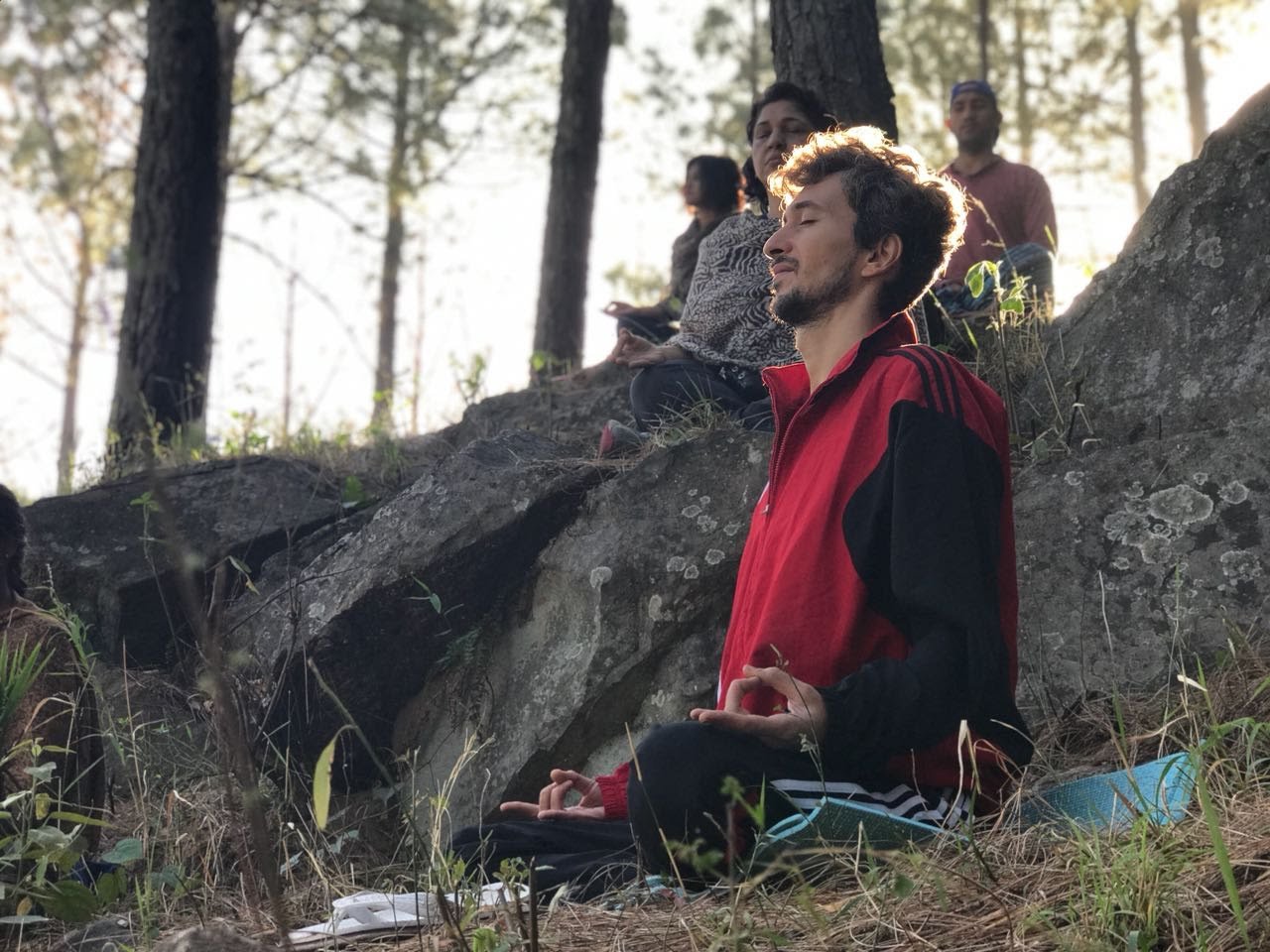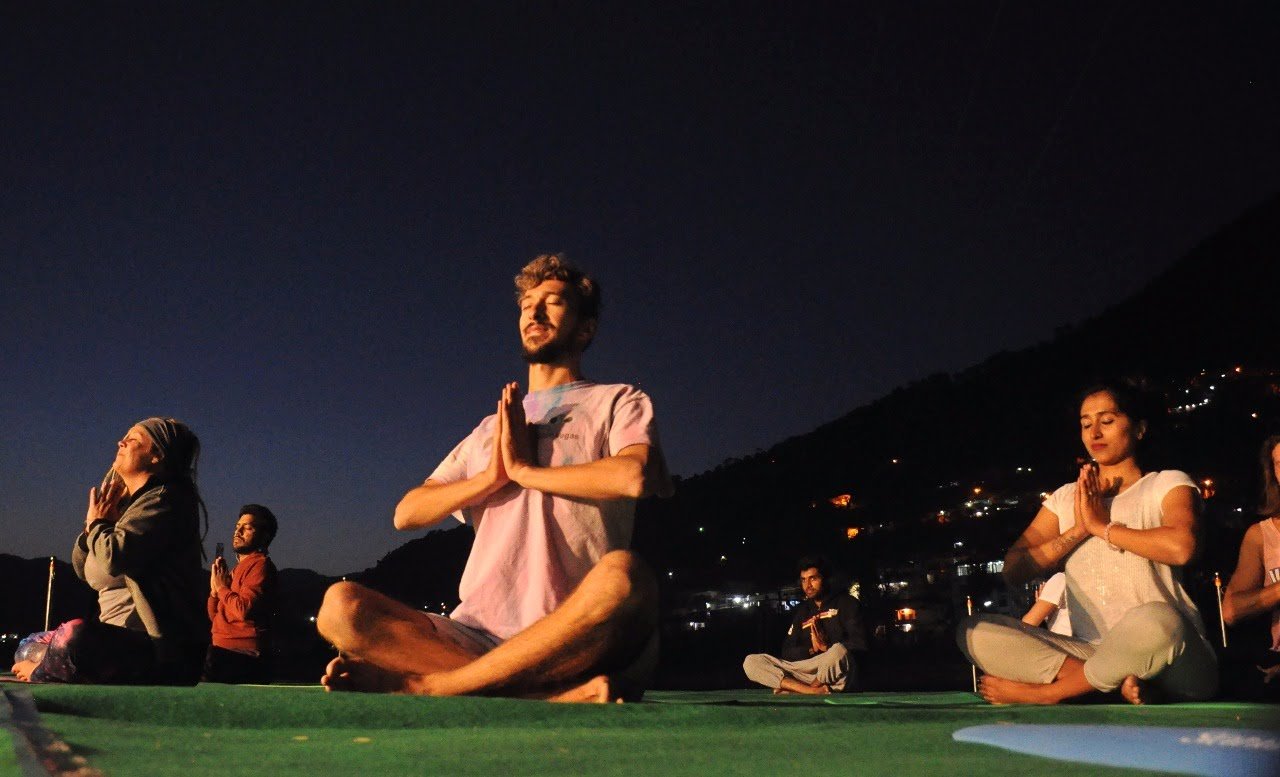
"Meditation" is used today for almost any quiet practice. The Yoga Sutras are more precise. They distinguish dharana, concentration, from dhyana, meditation, and describe how one grows into the other. Together with samadhi, absorption, they are the last three of the eight limbs.
Dharana: holding the mind in one place
Dharana is "binding the mind to one place" (3.1). You choose a single object, such as the breath, a sound, a point in the body or a flame, and keep returning to it each time the mind wanders. At first the attention keeps slipping away; dharana is the effort of bringing it back.
Dhyana: an unbroken flow
Dhyana is when the attention on that object becomes continuous, "a steady flow of awareness" towards it (3.2). The effort of returning fades because the mind no longer wanders far. In samadhi, the next stage, even the sense of a separate meditator falls away and only the object shines (3.3). Practised together on one object, the three are called samyama (3.4).
A simple daily method
- Sit with a tall spine, eyes closed, for ten to twenty minutes, at the same time each day.
- Choose one object and keep it for weeks: the breath at the nostrils is the simplest.
- Rest your attention there. When you notice it has wandered, note "thinking" and return, without criticism.
- Count the returns, not the failures: each return is the practice.
- End by sitting quietly for a minute before you get up.
Practices that steady the attention first make this easier: trataka, candle gazing, is a classical preparation for dharana, and our guide to meditation for beginners covers posture and timing.
The obstacles to expect
The Sutras list nine obstacles to practice, including illness, dullness, doubt, carelessness, laziness, distraction by the senses, false perception, failing to reach a stage and failing to hold it (1.30). They are normal. The remedy the Sutras give is steady practice on a single object (1.32).
Concentration in daily life
Dharana is not only for the cushion. Doing one thing at a time, with full attention, is the same training: eating without a screen, listening without planning a reply, walking without a phone. Each strengthens the attention that meditation depends on.
Meditation with us
Raja yoga, including pratyahara and dharana, is part of the curriculum of our 200 Hour Yoga Teacher Training, with guided meditation each evening. For a week of daily practice in the mountains, our Himalayan Wellness Retreat is open to beginners, and yoga nidra is another way in.