Most people who come to India for yoga have heard of Rishikesh. Far fewer have heard of Uttarkashi, a small town about 140 kilometres further into the mountains on the banks of the Bhagirathi, the river that becomes the Ganges. For centuries it has been the place where sadhus and serious students went when Rishikesh was not quiet enough. This guide explains why, and covers the practical questions we are asked most often: how to get there, when to come and what to expect.
Why Uttarkashi?
The name means "the Kashi of the north". Like Varanasi, the town has a temple to Shiva as Vishwanath at its centre, and like Varanasi it has long been regarded as a place where spiritual practice bears fruit more quickly. It lies on the pilgrimage road to Gangotri, the source of the Ganges, and generations of renunciates have stopped here on the way up or settled for good in the ashrams and kutirs along the river.
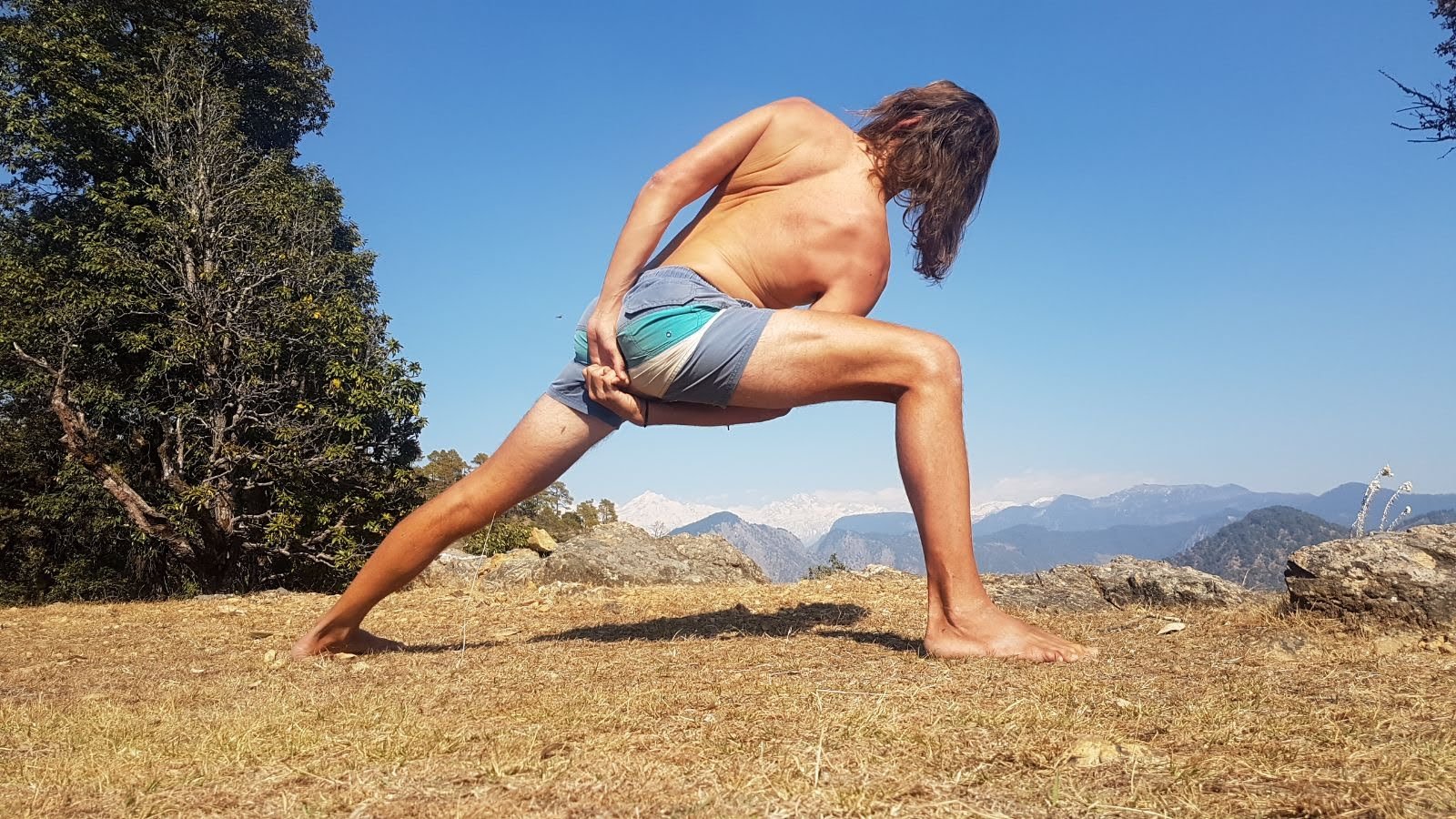
For a yoga student the attraction is simpler. Uttarkashi sits at about 1,158 metres in the Garhwal Himalaya, surrounded by forested ridges, with the river running through the valley floor. The air is cleaner and cooler than in the plains, nights are quiet, and there is very little to do except practise, study, eat and sleep. That is exactly what a residential course needs. Students who have trained in busier towns often tell us that the hardest part of their earlier course was not the asana but the distraction.
Uttarkashi or Rishikesh?
Both are in Uttarakhand and both have deep roots in yoga, but they suit different people.
- Rishikesh is easy to reach, full of cafés, bookshops and other travellers, and offers an enormous choice of schools. It is lively, and in peak season it is crowded.
- Uttarkashi is higher, smaller and much calmer. There are far fewer schools, far fewer visitors and almost no nightlife. Getting there takes a day of travel through the mountains.
If you want a social, varied experience with plenty of options on your day off, Rishikesh is a fine choice. If you want to disappear into a month of practice, Uttarkashi is hard to beat. Yoga Bhawna Mission teaches in both places: our main school is in Uttarkashi, with a second campus in Rishikesh.
How to reach Uttarkashi
There is no airport or railway station in Uttarkashi itself; the last stretch is always by road.
- By air: the nearest airport is Jolly Grant in Dehradun (DED), with direct flights from Delhi and other Indian cities. From the airport it is roughly 170 to 190 kilometres to Uttarkashi, about six hours by taxi through the hills.
- By train: the nearest major stations are Haridwar, Rishikesh and Dehradun, all well connected to Delhi. From there you continue by taxi, shared jeep or bus.
- By road: buses run from Rishikesh and Dehradun through the year. Shared jeeps are faster than the bus; a private taxi is the most comfortable.
Mountain roads are slow, so plan to arrive in daylight and avoid booking onward travel on the same day. Every Yoga Bhawna Mission course includes free pick-up and drop from Dehradun, so our students simply send us their arrival details and are met at the airport.
The best time to come
The two comfortable seasons are March to June and September to November. Spring brings clear skies and warm days; autumn, after the rains, brings the sharpest mountain views and crisp mornings.
July and August are monsoon months. The valley is green and beautiful, but landslides can close the road for hours or days, so travel plans need slack. December to February is cold: days are often sunny, but mornings and nights drop close to freezing and you will want warm layers for early practice.
What a day of practice looks like
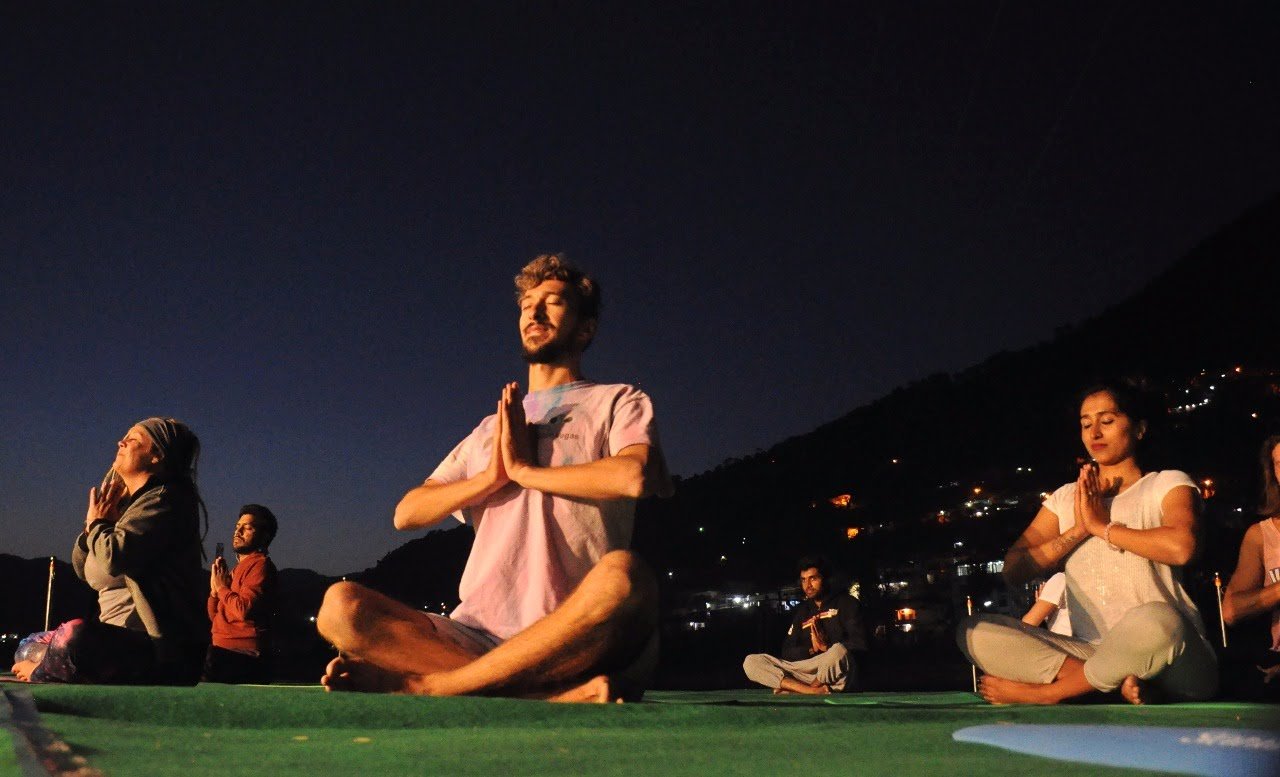
At our school the day begins before sunrise with pooja and group yagya at the Shiva temple on the premises, followed by pranayama and a morning asana class, either in the indoor shala or on the river bank. After breakfast come lectures in philosophy, anatomy or teaching method; the afternoon has a rest period and a second practice; the evening ends with meditation and an early night. Meals are sattvic and vegetarian.
Nobody needs to be an advanced practitioner to arrive. What helps most is a regular personal practice for a few months beforehand, comfortable clothes for cold mornings, and the willingness to keep a simple routine for the length of the course.
Things to do in Uttarkashi
Days off on a course are for rest, but there is plenty within reach, and many students stay on for a few days afterwards.
- Kashi Vishwanath temple: the Shiva temple that gives the town its name, in the centre of Uttarkashi. Opposite stands the Shakti temple, known for its tall ancient trident.
- The ghats on the Bhagirathi: quiet riverside steps for an evening walk, with the aarti at dusk.
- Nehru Institute of Mountaineering: one of India's best-known climbing schools is based in Uttarkashi, and its museum tells the story of Himalayan mountaineering.
- Maneri: a short drive up the valley, with a reservoir on the Bhagirathi and village walks.
- Nachiketa Tal: a small forest lake above the valley, reached by road and a gentle walk; a good half-day outing.
- Gangnani and Harsil: further up the road to Gangotri, Gangnani has hot springs and Harsil is a pretty village of apple orchards and deodar forest.
- Gangotri: the temple near the source of the Ganges, about a hundred kilometres up the valley, open from late April or May until around Diwali.
- Treks: Uttarkashi is the starting point for Dodital, a lake trek, and the high meadows of Dayara Bugyal. Serious treks are best left until after a course rather than squeezed into it.
Training or a retreat in Uttarkashi
If you are considering a teacher training, our 200 Hour YTTC in Uttarkashi is a 26-day residential course registered with Yoga Alliance, and the 500 Hour Advanced YTTC continues from there. For a shorter stay, the 7 Day Himalayan Yoga & Meditation Retreat is a gentle introduction to the place and the practice. If you have questions about travel or dates, write to us; we are happy to help you plan the journey.