Meditation is simple to describe and hard to do. You sit, you rest your attention on one thing, and when it wanders you bring it back. That is almost all of it. What makes it difficult is not the technique but the mind's resistance to being still, and the expectations we bring to it. This guide sets out a straightforward way to begin, drawn from the classical yoga tradition we teach.
Where meditation sits in yoga
In Patanjali's Yoga Sutra, meditation is the seventh of the eight limbs, dhyana, and it rests on the ones before it: a steady posture (asana), a calm breath (pranayama), withdrawing the senses from distraction (pratyahara) and concentration (dharana). You do not need to master the earlier limbs before you begin, but they explain why a few minutes of gentle movement and breathing before you sit makes meditation so much easier. Our article on the 8 limbs of yoga explains each one.
How to sit
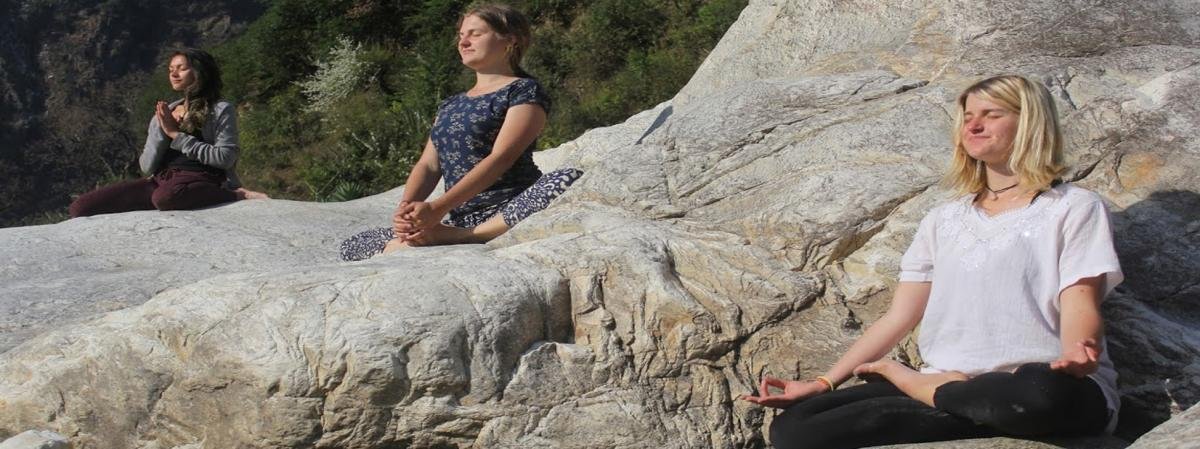
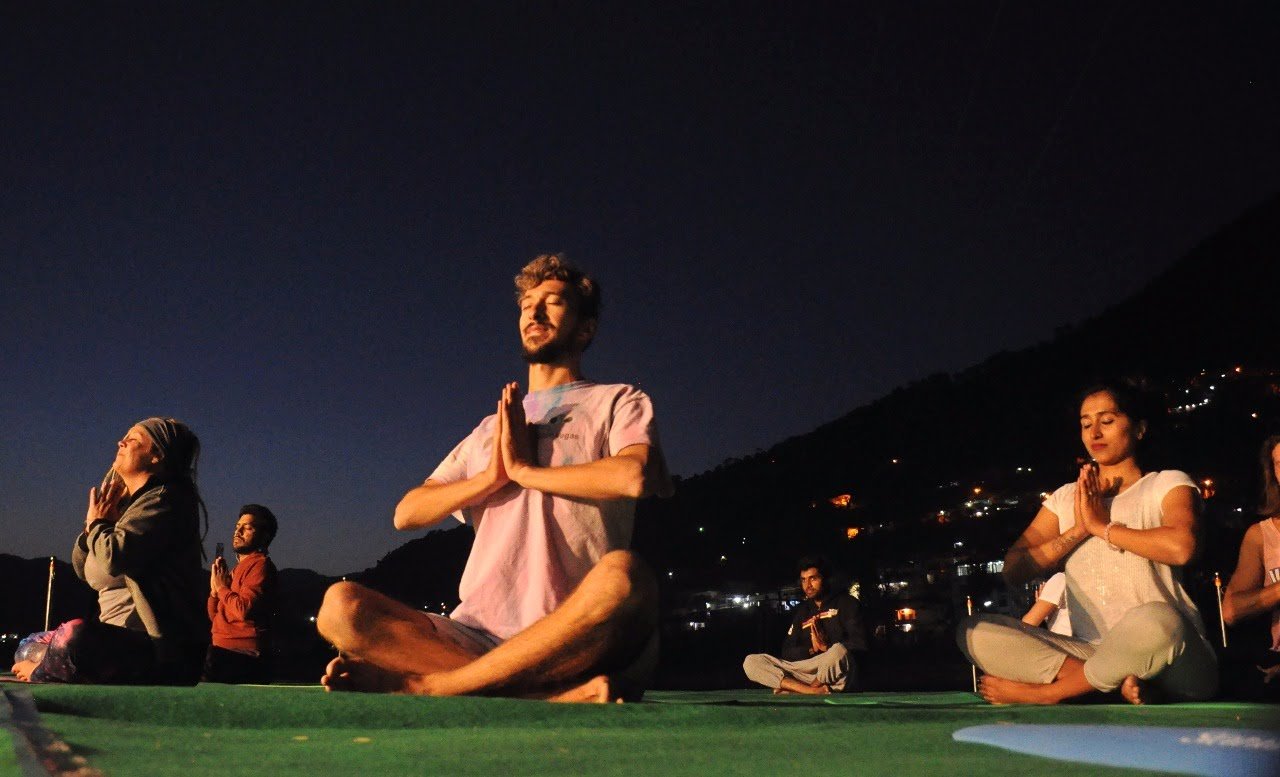
The only requirement is a posture you can hold comfortably and still for the length of your practice, with the spine upright. That can be cross-legged on a cushion, kneeling on a meditation bench, or sitting on a chair with both feet flat on the floor. A firm cushion under the hips, so that the knees are lower than the hips, makes cross-legged sitting far more comfortable. Rest the hands on the knees or in the lap, relax the shoulders and the face, and close the eyes or let the gaze rest softly on the floor ahead.
A first practice: ten minutes with the breath
- Sit, settle and take three slow breaths, letting each exhalation be a little longer than the inhalation.
- Let the breath return to its natural rhythm. Do not control it.
- Rest your attention on the sensation of breath at the nostrils, or on the rise and fall of the abdomen. Choose one and keep it.
- When you notice the mind has wandered, and it will, many times, note where it went without judgement and return to the breath. That return is the practice, not a failure of it.
- After ten minutes, take a few deeper breaths, open the eyes slowly and sit for a moment before getting up.
If you find the breath too subtle to follow, try counting: count each exhalation from one to ten, then start again at one. If you lose count, simply start again.
Other traditional methods
- Mantra and japa: repeating a word or phrase, silently or aloud, often with a mala of 108 beads to keep count. The rhythm gives a busy mind something to hold.
- Trataka: gazing steadily at a candle flame, then closing the eyes and holding its after-image. A classical concentration practice, best learned with a teacher at first.
- Antar mouna (inner silence): observing thoughts and sensations as they arise, without following them.
How long and how often?
Daily matters far more than long. Ten minutes every day will change more than an hour once a week. Choose a regular time, early morning is traditional because the mind is quieter, and a regular place, and keep the commitment small enough that you will actually keep it. Increase the time slowly once the habit is established.
The common obstacles
- Restlessness: the body fidgets and the mind races. A few minutes of movement or gentle pranayama before sitting helps, as does a slightly longer exhalation.
- Sleepiness: sit more upright, open the eyes a little, and practise at a time of day when you are alert.
- Expectation: waiting for a special experience is itself a distraction. Some sessions will feel calm and some will not. Both count.
- Doubt: it is normal to wonder whether anything is happening. The effects of regular practice usually show up first in daily life, as a little more patience or steadiness, rather than in the meditation itself.
Learning with a teacher
A book can start you off, but a teacher can see what you cannot: a posture that is straining, a technique that does not suit you, an obstacle you have been fighting the wrong way. A residential retreat, where meditation is part of every day, is one of the quickest ways to build a practice that lasts. Our 7 Day Himalayan Yoga & Meditation Retreat in Uttarkashi is open to complete beginners, and our beginner's guide to a first retreat explains what to expect.
Read next: Yoga Nidra: What It Is and How the Practice Works