Course pages tell you the syllabus. What most people really want to know is simpler: what will my day actually look like? Here is the real timetable of our 200 Hour Yoga Teacher Training in Uttarkashi, a 22-day residential course for a maximum of 20 students, and what each part of the day is for.
The timetable
| Time | Session |
|---|---|
| 06:00 – 07:00 | Shatkriya & pranayama, or pranayama, mudra & bandha, or pranayama & mantra chanting |
| 07:15 – 08:45 | Hatha yoga, Ashtanga primary series, or led Ashtanga & Mysore |
| 09:00 – 09:45 | Breakfast |
| 10:00 – 11:15 | Yoga philosophy, anatomy and physiology, the Yoga Sutras, the Hatha Yoga Pradipika, or Ayurveda |
| 11:30 – 12:45 | Teaching methodology, alignment & adjustment, teaching practice, or a therapeutic yoga workshop |
| 13:00 – 14:00 | Lunch & rest |
| 16:00 – 17:30 | Ashtanga vinyasa, Hatha asana & bandha, or restorative Hatha |
| 18:00 – 19:00 | Guided meditation, yoga nidra, satsang & questions, or kirtan & mantra chanting |
The subjects in each slot rotate through the week, so you do not have the same lecture every day. The course runs six days a week.
Early morning: breath before body
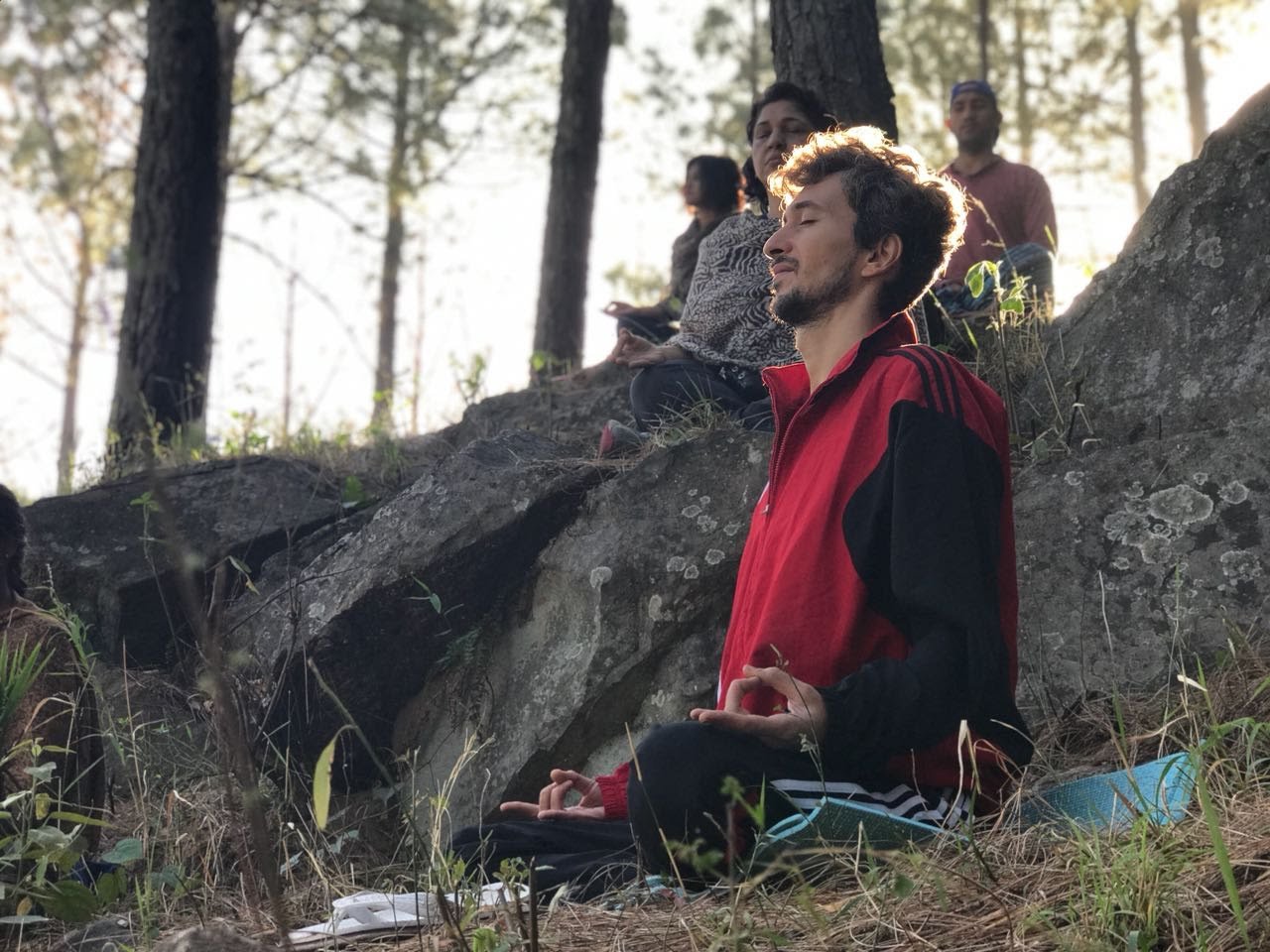
The day opens at 6 am with cleansing practices and breathwork: shatkriya, pranayama, mudra and bandha, or mantra. Doing this on an empty stomach, before the asana class, is how Hatha yoga has traditionally been taught. It wakes the body gently and steadies the mind for the long practice that follows.
Morning asana: the main practice
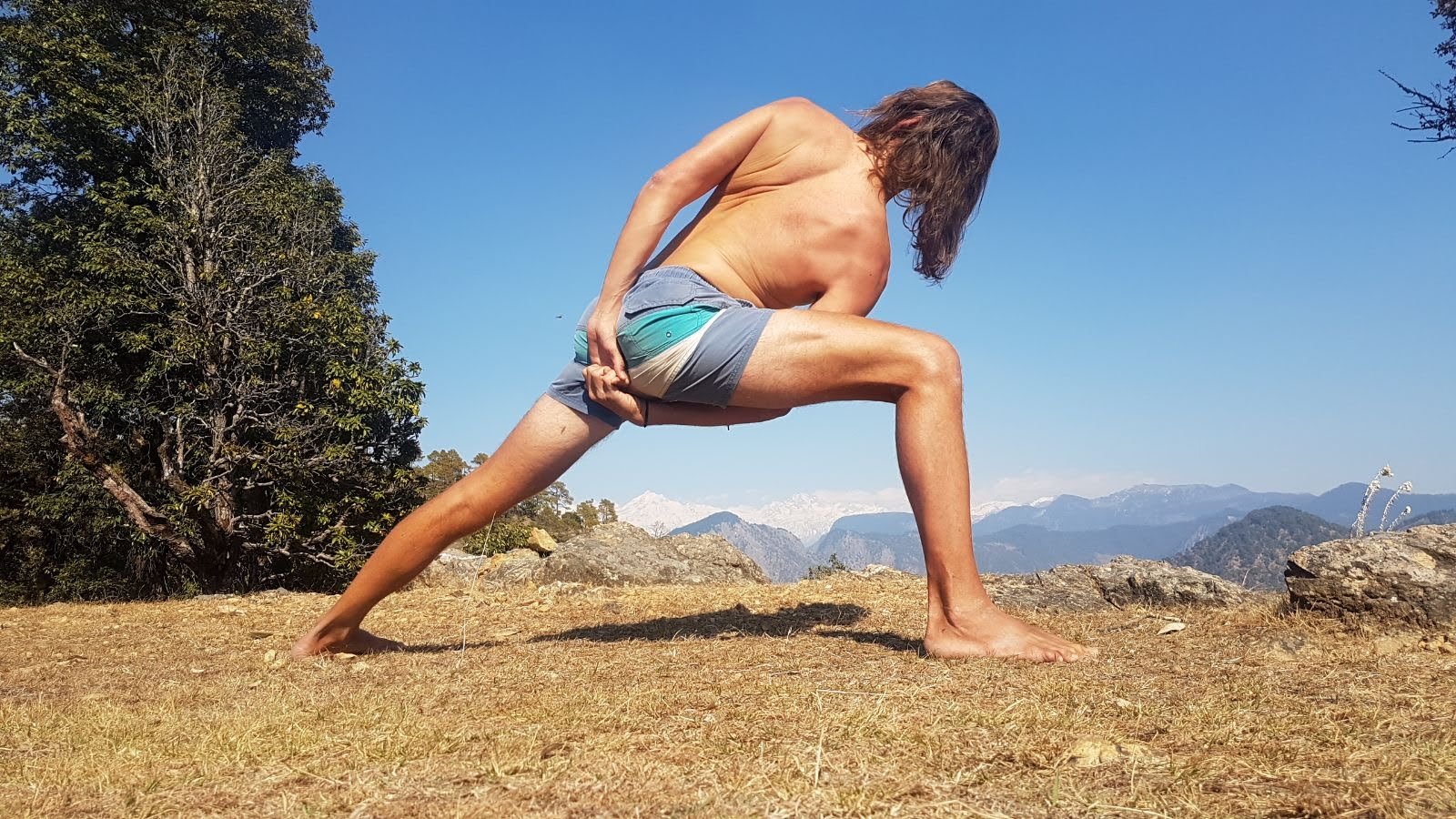
At 7:15 comes the longest physical class, 90 minutes of Hatha or Ashtanga. This is where your own practice deepens, and where teachers correct your alignment. Beginners are given modifications; nobody is expected to arrive advanced. Our asana library has the poses you will meet in the first week.
Late morning: the classroom
After breakfast, two study blocks. The first is theory: philosophy, the Yoga Sutras, the Hatha Yoga Pradipika, anatomy and Ayurveda. The second is about teaching: how to sequence a class, how to give clear instructions, how to adjust safely, and supervised practice teaching your fellow students.
Afternoon: rest, then practice again
Lunch is followed by real rest until 4 pm: sleep, study, wash clothes or sit by the river. The afternoon class is often more varied, from dynamic Ashtanga to restorative Hatha, so the body is not worked the same way twice a day.
Evening: meditation and satsang
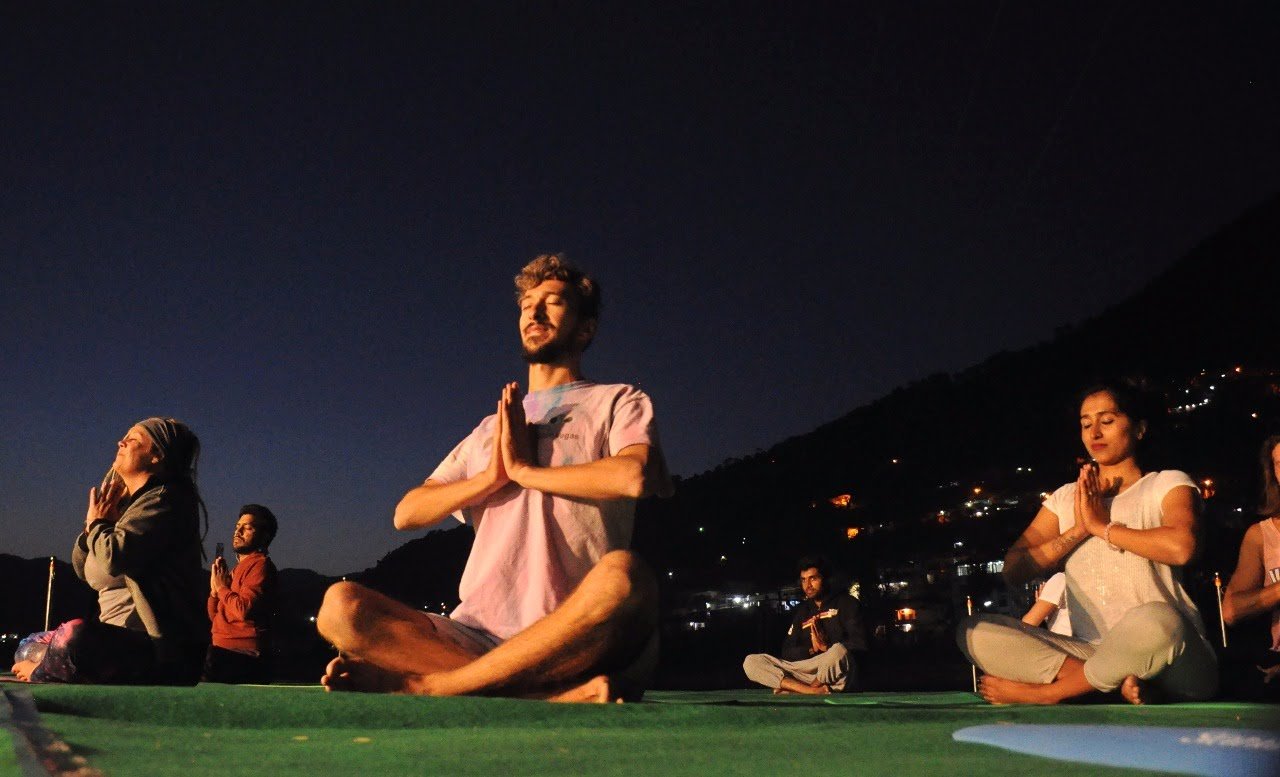
The day closes at 6 pm with meditation, yoga nidra, kirtan or a satsang where you can ask the teachers anything. Then dinner, and most students are asleep early.
How to cope with the long days
- Sleep early. The 6 am class is easy after eight hours of sleep and hard after six.
- Eat lightly before practice. The meals are sattvic and vegetarian; let them settle before the next asana class.
- Use the afternoon break. Rest, do not cram.
- Take notes in the theory classes. They are the base of your written assessment.
- Bring what you need. See what to pack.
Wondering whether you can keep up as a beginner? Read can beginners join a 200 hour yoga teacher training, or see the full course details and fees.