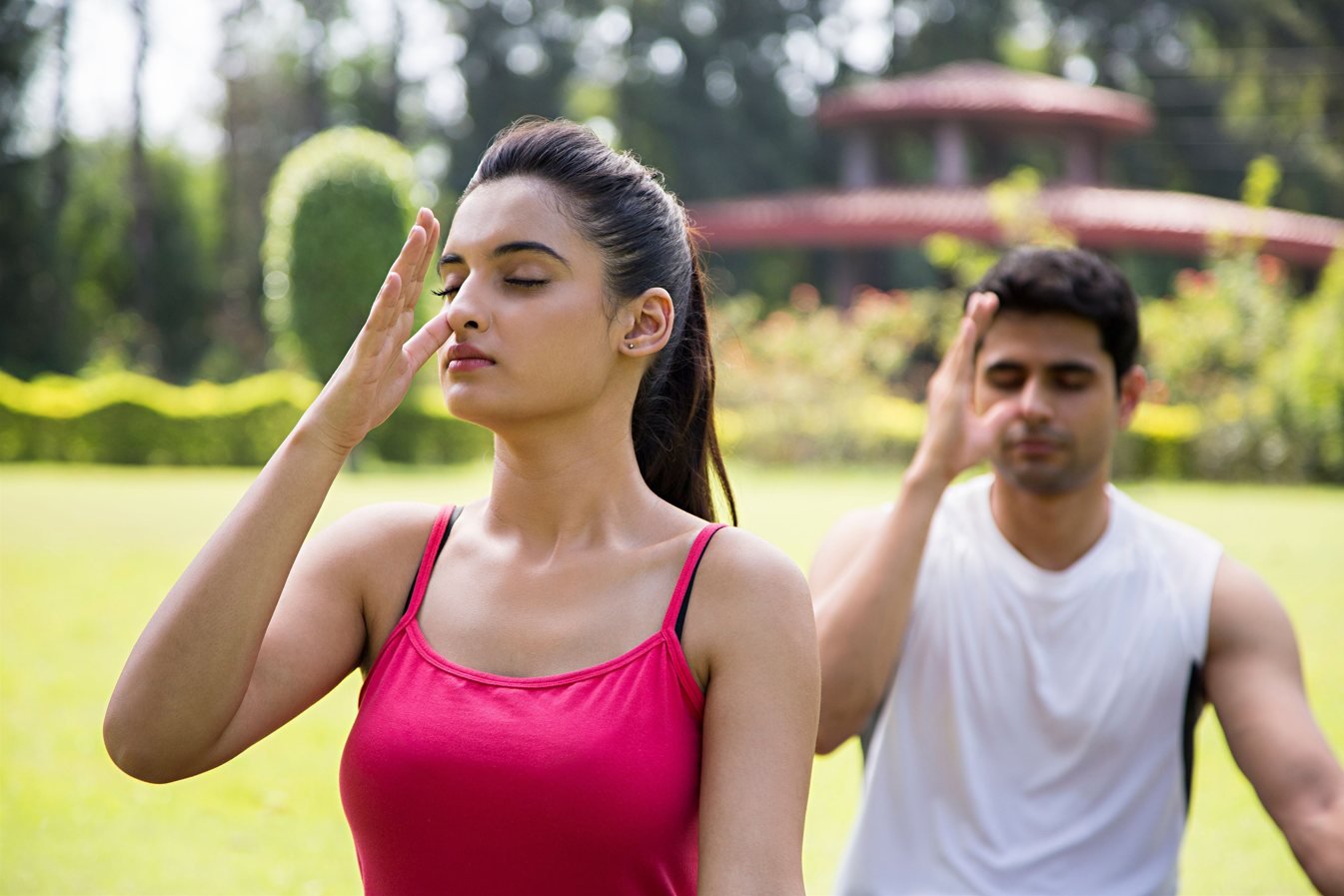
Rishikesh calls itself the yoga capital of the world. Nobody conferred the title; the town took it, and then earned enough of it to keep it. The phrase is now painted on the approach roads and printed on ten thousand brochures, and like most slogans it is about a third true. The third that is true is worth understanding properly, because the history behind it is real and it is not the history most visitors are told.
Before the phrase existed
Rishikesh sits where the Ganga leaves the hills for the plain — the last place a traveller from the south is still in the mountains, and the first place a pilgrim walking to Badrinath and Kedarnath sets out from. That position, not yoga, made it. For centuries it was a staging post on the Char Dham pilgrim route and a place where renunciates settled because the town was quiet and the river was there.
The institutional history begins in 1880, when the ruler of Tehri granted land at Muni Ki Reti to Swami Dhanraj Giri, who founded Kailash Ashram Brahmavidya Peetham as a school of Advaita Vedanta. It was among the first large ashrams in Rishikesh, and it was a seat of textual study rather than of practice as the word is used now. Swami Vivekananda, Swami Rama Tirtha and others of that generation studied there. That is the older layer of Rishikesh, and it is a Vedanta layer, not a yoga one.
Sivananda, and the lineage that left
The turn comes in 1936. Swami Sivananda Saraswati, a physician who had practised in Malaya before taking sannyasa, settled in a hut on the Ganga bank at Muni Ki Reti and founded the Divine Life Society. He wrote prolifically — several hundred books, in plain English, aimed squarely at the ordinary householder — and this, as much as anything he taught in person, is why the world came to know the place.
What matters most for the town's later reputation is who passed through. Swami Vishnudevananda, whom Sivananda sent West in 1957, founded the Sivananda Yoga Vedanta Centres and put a recognisable form of hatha yoga into Europe and North America. Swami Satyananda Saraswati founded the Bihar School of Yoga at Munger in 1963, inaugurating it on Vasant Panchami in January 1964, and from there the Satyananda tradition — with its systematic treatment of pranayama, the shatkarmas and yoga nidra — reached a great many practitioners. Swami Chinmayananda founded the Chinmaya Mission and returned Vedanta to a lay audience.
Note what that list actually shows. Rishikesh's great contribution was as a source. Its most consequential teachers were formed there and then worked elsewhere — Munger, Canada, Bombay, everywhere. The town exported.
1968, and what fame did
Then the Beatles came to Maharishi Mahesh Yogi's ashram in February 1968 to study Transcendental Meditation, and Rishikesh stopped being a place Indians knew about. Whatever one thinks of that episode, it changed Western attitudes to Indian spirituality more efficiently than fifty years of patient teaching had, and it set the town's course. The ashram itself was abandoned in the 1990s and is now a ruin inside the Rajaji forest, visited daily by people photographing the graffiti on the meditation cells.
The rest followed steadily: the International Yoga Festival, which Parmarth Niketan has hosted since 1999; the growth of Tapovan and Laxman Jhula into a dense grid of schools, cafés and shops; and then, after yoga became a global consumer product, the arrival of hundreds of teacher training courses running month after month.
What has changed, said honestly
Rishikesh today contains some genuinely excellent teaching. It also contains a great deal that is not. Both statements are true at once and it does nobody any good to pretend otherwise.
The concentration of schools in a few streets has had real effects. Competition is on price and on photographs, which pushes group sizes up and course fees down, and there is only so far both can go before the teaching thins out. Faculty move between schools frequently, so a name on a website in October may not be in the hall in March. And because Yoga Alliance registration is a listing rather than an inspection, the registered logo appears equally on the doors of schools that deserve it and schools that do not.
There is a quieter cost too. Muni Ki Reti in 1936 was a place people went to be undisturbed. Tapovan in season is a place with traffic, and the ashrams that still keep a serious daily discipline are increasingly hemmed in by an economy that has very little to do with them. This is not a complaint about tourists; it is what happens to any small town that becomes a destination. But it does mean that the reason the sadhus originally came — silence, and the ability to be left alone — is now easier to find elsewhere.
The older claim, further up the river
Here is the part that is usually left out.
Follow the Ganga upstream. At Devprayag the river you call Ganga divides into the Alaknanda and the Bhagirathi; below that confluence it is Ganga, above it, it is not. Take the Bhagirathi branch, north-west into the Garhwal Himalaya, and after some hours you reach Uttarkashi — the northern Kashi. It stands at about 1,158 metres on the Bhagirathi's bank, some ninety to a hundred kilometres by road below Gangotri, on the pilgrim route to the river's source at Gaumukh, where the Gangotri glacier ends at nearly 3,900 metres.
The town's older names tell you what it was: Barahat, Saumya Kashi, the gentle Kashi. Like Varanasi it stands on the west bank of the Ganga with a Vishwanath temple at its centre, and the Skanda Purana holds that Shiva will settle here in the latter half of the Kali Yuga. This is not a recent claim assembled for visitors. It is why the place has been a tapobhumi, a ground for austerity, for as long as anyone can trace.
The most telling modern example is Swami Tapovan Maharaj, who chose Uttarkashi when it was a remote and difficult village, lived in a one-room mud hut, ate once a day, and bathed twice daily in the freezing Bhagirathi. Swami Chinmayananda studied Vedanta with him there in the early 1950s. It was Sivananda himself — from Rishikesh — who called Tapovan Maharaj Himavat Vibhuti, the glory of the Himalaya. The ashrams at Ujeli, just outside the town, are still there, and still mostly unvisited.
Uttarkashi has never marketed itself. That is precisely the point. Rishikesh became the yoga capital because it was accessible, because Sivananda wrote in English, and because four Englishmen visited in 1968. Uttarkashi did not become anything, because it was three difficult days further up a road that flooded. What it retained is the thing the whole apparatus was originally built to protect: quiet, cold water, thin air, long winters, and no reason to be there except practice.
So which should you go to
I teach in both places, so treat this as an interested opinion rather than a neutral one.
Rishikesh is the right choice if it is your first time in India, if you want other students around you in the evening, if you need an airport ninety minutes away and a pharmacy on the corner, and if you intend to visit several schools before committing. It is a forgiving place to arrive in, it is warm most of the year, and the sheer density means that if you research carefully you can find something very good.
The deeper valley is the right choice if you already have a practice and want it to go somewhere. It is colder. The road can close. There is less to do, which is the feature and not the fault. The river outside the window at Uttarkashi is a few days old and it sounds like it; you notice, after about a week, that the practice has become the most interesting thing available, which is a state of affairs the classical texts assume and modern life almost never permits.
The yogi should practise in a small hut in a secluded place, free from stones, fire and damp, in a well-governed country where good people live and food is easily had. Hatha Yoga Pradipika 1.12
That verse was written about somewhere, and it was not written about a town with three hundred schools in it. Nor is it an argument for hardship — the same passage insists on shelter, food and a peaceable neighbourhood, which is to say ordinary comfort. It is an argument for proportion. Go where the practice is the reason you are there.
Rishikesh has earned its title. The valley above it never needed one.