Every teacher training I have taught has arrived at the same afternoon. Someone opens Patanjali's Yoga Sutra, finds the list of eight limbs, and asks how long it takes to get from the first one to the last. It is a fair question and it is the wrong one. The list is not a staircase. It is closer to a description of a body: eight limbs (ashtanga — ashta, eight; anga, limb) of one living thing, all of them present at once, each one feeding the others.
Patanjali gives the whole list in a single line: yama niyama asana pranayama pratyahara dharana dhyana samadhayo'shtav angani (Yoga Sutra 2.29). Eight words. Almost everything else in the text is elaboration on those eight. Here is what each one asks of a practitioner, in the plainest language I can manage — and then the more useful question of how they actually work on each other.
Yama — how you meet the world
Five of them (2.30): ahimsa, not harming; satya, truthfulness; asteya, not taking what is not given; brahmacharya, continence, the right use of one's vital energy; aparigraha, not grasping or hoarding.
The next line is the one students skip. Patanjali calls these the mahavratam — the great vow — "not limited by birth, place, time or circumstance" (2.31). There is no version of ahimsa that applies on the mat and lapses in traffic. That is the whole point of the sutra.
He also gives a method rather than a scolding. When the practice is disturbed by contrary thoughts, cultivate the opposite (pratipaksha bhavanam, 2.33). Not suppression. Substitution. This is technique, and it is available to a beginner on day one.
Niyama — how you meet yourself
Also five (2.32): saucha, cleanliness of body and surroundings; santosha, contentment; tapas, disciplined effort — the word literally means heat; svadhyaya, self-study and the study of the texts; ishvara pranidhana, surrender of the fruits of one's effort.
Notice that the last three of these were already named at the opening of the same chapter as kriya yoga, the yoga of action (2.1). Patanjali offers them as the practical starting point for someone living an ordinary life. Effort, study, and letting go of the result. If a householder asks me where to begin with the observances, I point here and nowhere else.
Asana — the seat
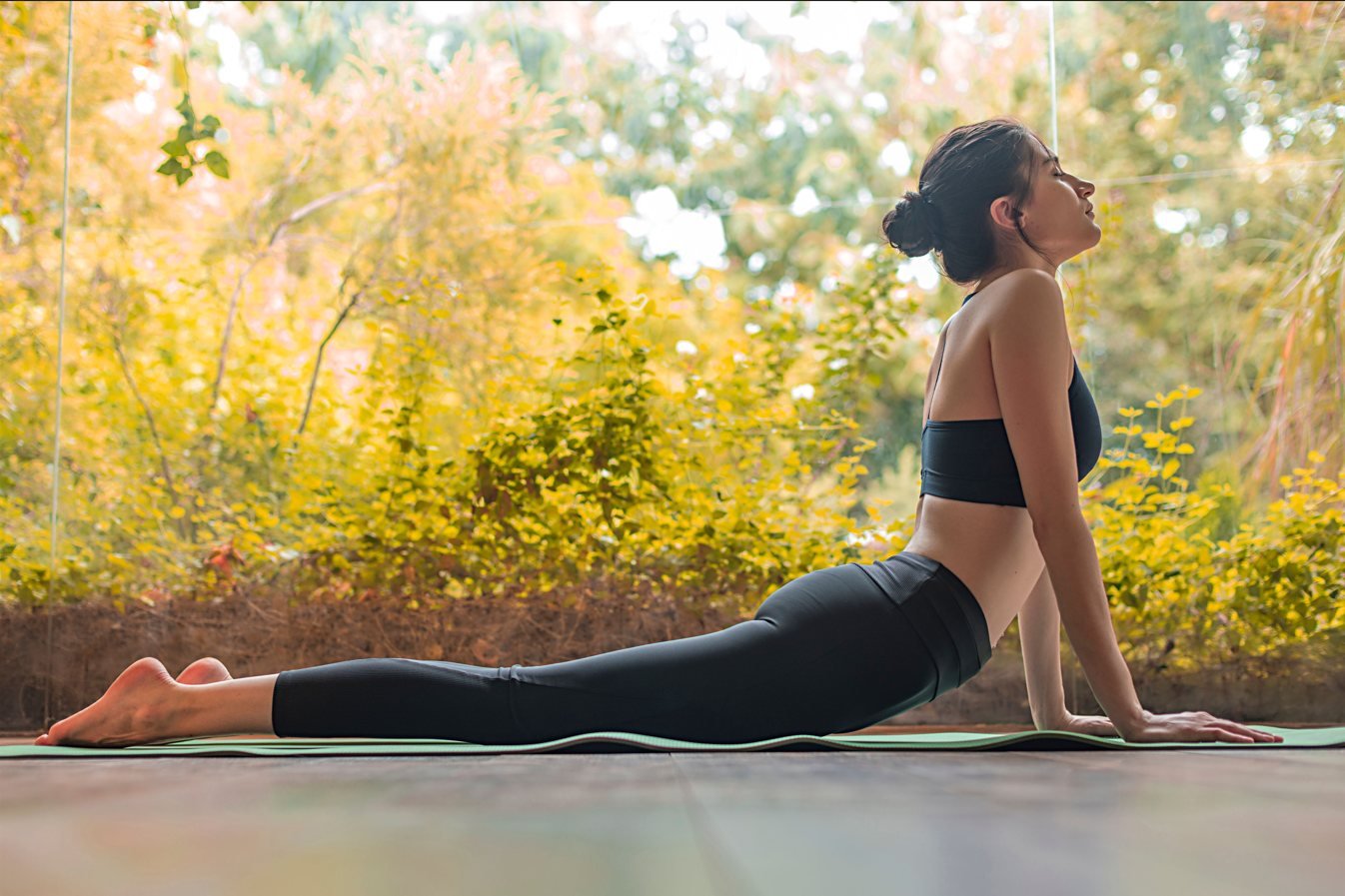
Sthira sukham asanam (2.46). The posture is steady and comfortable. Two words, and they are load-bearing. Steady without comfort is strain; comfortable without steadiness is collapse. Both are failures of asana in Patanjali's sense, however photogenic.
It is perfected, he says, by the relaxation of effort and by resting the attention in the infinite (2.47) — and then the pairs of opposites, heat and cold, hunger and thirst, stop assaulting you (2.48). What a teacher watches for is simple: a student holding a shape but not breathing inside it. If the breath has gone ragged, the asana has already been lost, whatever the legs are doing.
Be clear about one historical point. Patanjali's asana is a seat for sitting — the elaborate repertoire of postures comes later, from the hatha texts. The Hatha Yoga Pradipika describes fifteen asanas; the Gheranda Samhita gives thirty-two out of "eighty-four hundred thousand". Modern classes teach far more. That is a development within the tradition, not a betrayal of it, but it should not be read backwards into the Sutra.
Pranayama — regulation of the breath
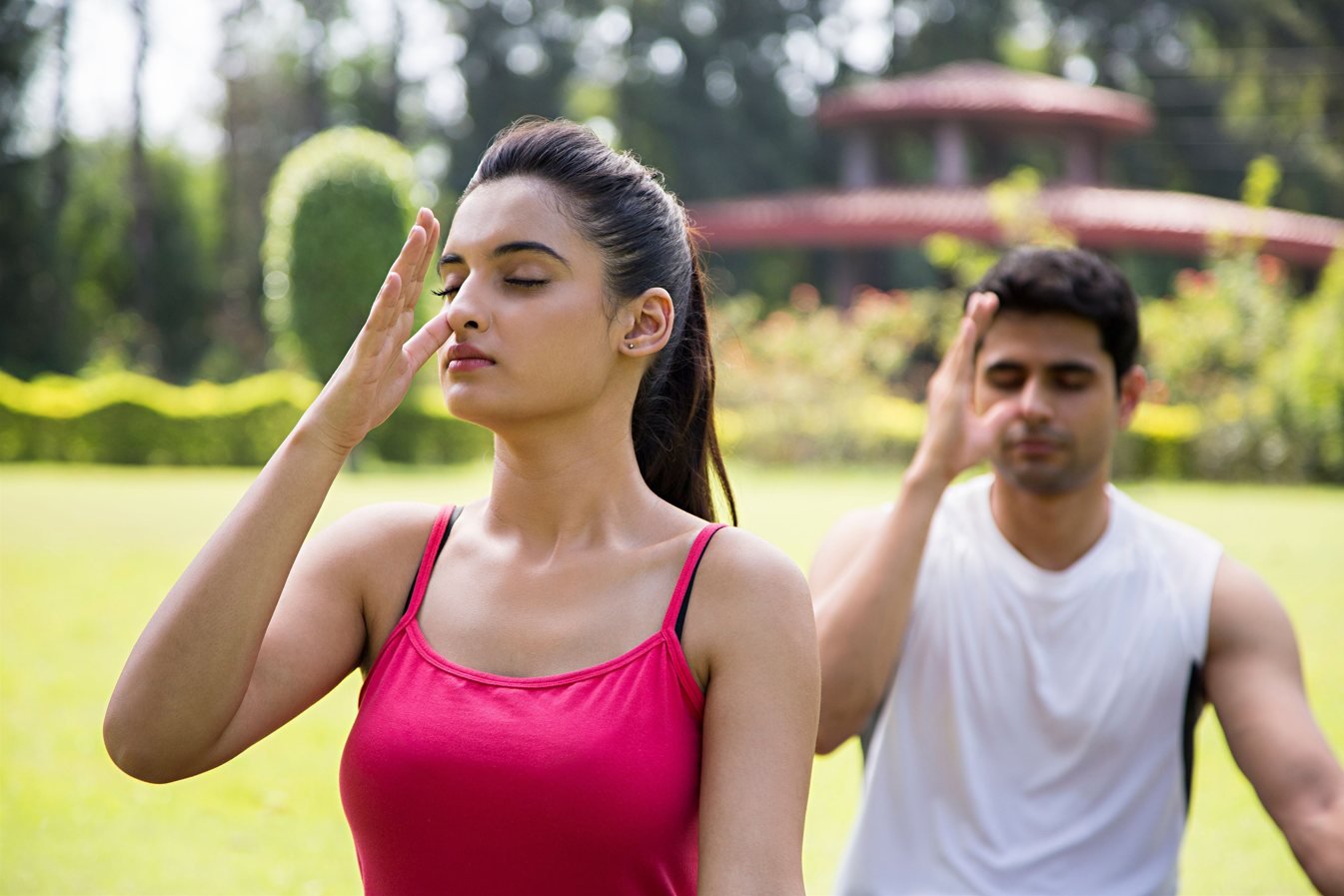
Sutra 2.49 begins tasmin sati — "that being accomplished". That is, asana being established, then comes the regulation of the movement of inhalation and exhalation. The dependency is stated in the text itself. The hatha tradition repeats it: "seated firmly in asana, self-controlled, eating moderate and wholesome food, the yogi should practise pranayama as instructed by his guru" (Hatha Yoga Pradipika 2.1).
Patanjali then describes the practice technically: external, internal and suspended movement, regulated by place, time and number, becoming long and subtle (2.50). The result is that the covering over the inner light grows thin (2.52), and — this is the sentence that matters for the shape of the path — "the mind becomes fit for concentration" (2.53). Pranayama is not the destination. It is what makes the next limb possible.
Pratyahara — withdrawal of the senses
The senses, disengaged from their objects, follow the nature of the mind (2.54). This is the most misunderstood limb. It is not shutting the senses off, and it is not sensory deprivation. It is the moment the senses stop dragging the attention outward on their own initiative.
The most systematic modern method for training it is yoga nidra, developed by Swami Satyananda Saraswati at the Bihar School of Yoga in Munger and set out in his book of that name in 1976. He drew it out of the older tantric practice of nyasa, the placing of awareness in successive points of the body, and built it into a staged practice — resolve, rotation of consciousness, breath awareness, pairs of opposites, visualisation. He was explicit that it belongs under the heading of pratyahara. It is one of the few places where a beginner can feel this limb working within a single session.
Dharana, dhyana, samadhi
Dharana is binding the attention to one place (3.1). Dhyana is the unbroken flow of attention toward that one place (3.2). Samadhi is when only the object shines forth and the sense of oneself as the meditator falls away (3.3). The difference between them is not what you do; it is how continuous it has become.
These three are so continuous that Patanjali gives them one name together — samyama (3.4). And here is the structural point people miss: he draws his own dividing line not between each limb, but between the first five and the last three, calling the last three the internal limbs and the first five external in comparison (3.7) — and then adds that even these are external compared with seedless samadhi (3.8). If the eight were a ladder with eight rungs, he would not have grouped them like this.
Why this is not a ladder
Consider what a strict sequence would mean in practice. You would perfect non-violence, non-lying, non-stealing, continence and non-grasping before you were permitted to sit down. Nobody would ever begin. And Patanjali does not ask for it. He says that from the sustained practice of the limbs of yoga, impurity dwindles and the light of knowledge grows (2.28) — the limbs, plural, practised together, with a gradual result.
What the ordering does encode is dependency in specific places, and only in those places. Asana before pranayama, because the text says so. Pranayama before dharana, because it makes the mind fit for it. Those are causal links between neighbours, not eight sequential gates.
The traffic also runs backwards. Sit still for thirty minutes and you will learn more about your own dishonesty than a month of thinking about satya would teach you. A long retention practised for vanity teaches you about grasping. The later limbs refine the earlier ones as much as the earlier ones support the later.
There is a further argument, and it comes from inside the tradition. The Gheranda Samhita teaches seven limbs, not eight, and places pranayama after pratyahara. The Hatha Yoga Pradipika organises its material around shatkarma, asana, pranayama, mudra and nada, and never uses the eightfold scheme as its spine at all. These are not rival religions. They are experienced teachers mapping the same territory with different roads. Anyone who has read two of them cannot treat the number eight as a fixed flight of stairs.
What to do with this
Practically: sit every day, even briefly. Take one yama and hold it in view for a month — pick the one you would rather avoid. Take up kriya yoga as Patanjali frames it: effort, study, and releasing the result. Keep the asana honest enough that the breath stays even. That is all eight limbs already in motion, unevenly, which is the only way they ever move.
And do not use the limbs as a scoring system. I have watched students turn this list into one more instrument for finding themselves inadequate, which is a strange use for a text whose second sentence is about stilling the movements of the mind. The limbs describe a life that is being lived, not a syllabus with a pass mark.